
Purpose
This guide explains the common commissioning checks for a battery or hybrid battery path in SEMS.
Verify the integration architecture first
Before you interpret SEMS values, determine which path owns battery visibility:
- hybrid inverter communication path;
- separate battery/BMS path;
- vendor-specific controller path.
The commissioning technician must know which device is authoritative for SOC and power feedback.
Validation workflow
- Add the battery or hybrid-inverter profile.
- Confirm communication is stable.
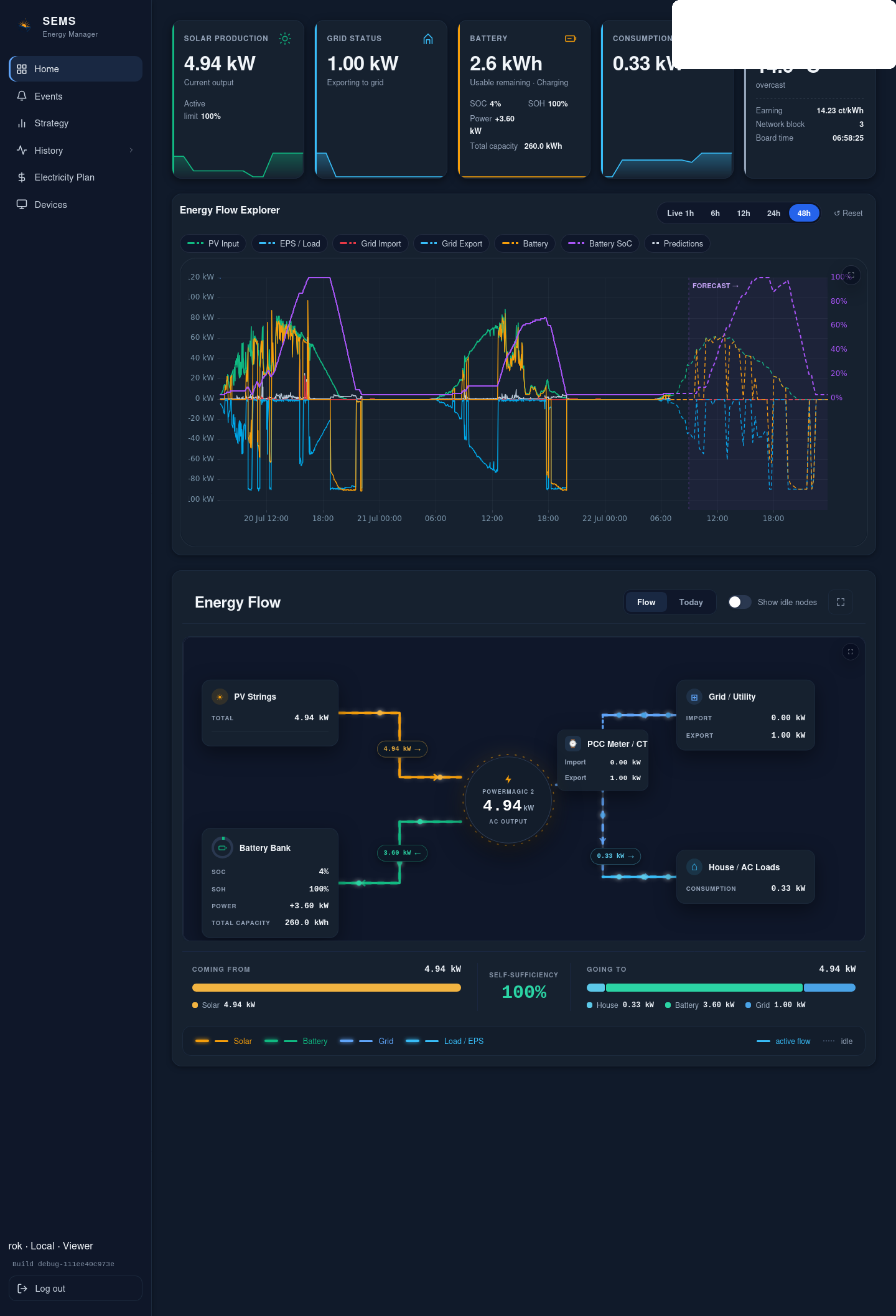
- Verify that SOC is plausible.
- Verify charge and discharge sign conventions against the real operating condition.
- If the project includes active control, perform only the approved safe control test for that device family.
What must be true before enabling control
- SOC is stable and believable
- power direction is correct
- there is no unresolved meter-direction problem
- alarm state has been reviewed
Safety boundary
Do not publish or execute aggressive battery write procedures from public documentation unless the exact device family and write path have been separately reviewed. This guide intentionally limits itself to safe validation and onboarding principles.
Was this helpful?
Did this article answer your question?
Feedback saved on this device. If you still need help, contact CyberSun support.